Worm your way out of apple pest problems - Record Searchlight
Worm your way out of apple pest problems - Record Searchlight |
- Worm your way out of apple pest problems - Record Searchlight
- Whacky research linking bold eyebrows to narcissism awarded Ig Nobel prize - ABC News
- Wondering How to Start a Worm Farm? Here's What You Need to Know - Green Matters
- Some doctors think they've found a cheap, generic drug which treats COVID-19. So why hasn't anyone heard of it? - WHYY
| Worm your way out of apple pest problems - Record Searchlight Posted: 18 Sep 2020 05:00 AM PDT
CLOSE  Q. We have had two questions related to growing apples this past week. The first reader asks why their Gala apples are not turning red even though they taste ripe. The second reader sent a photo of an apple with a worm in it and complained that the majority of the apples on the tree were damaged by wormholes. A. First I will address the the problem with apples not coloring. There are a few things that can cause the apple skin to fail to develop color, including watering practices and fertilization; but the most likely culprit, given that this apple tree is here in the Redding area, is our relatively high nighttime temperatures. When nights fail to cool off, the trees' respiration works overtime. This can pull sugars from the fruit, and also keep the fruit from developing color. Traditional apple-growing regions, such as upstate New York and eastern Washington state, have cool fall temperatures that are ideal for sugar and color development in the fruit. You will likely see a fluctuation from year to year in how well apples color. Some years, such as this one, have hotter August and September temperatures than others. The worms in the apples are caused by a codling moth. While the codling moth is a pest of pears and walnuts. they're the most destructive pest of apples. The moths are hard to spot because they have mottled gray wings that blend well with the tree bark, but the larvae are easy to see as they are pink worm-like creatures with dark brown heads. The larvae are what cause damage to the apple, burrowing into the core and leaving a trail of crumbly reddish brown frass (insect poo) in the tunnel through the apple flesh. The codling moth is difficult to control in the home orchard. The University of California Agriculture and Natural Resources Pest Notes say, "where populations are moderate to high and many infested trees are nearby, insecticide applications might be necessary to bring populations down to low levels. To be effective, the timing of insecticide spray applications is critical, and several applications are necessary, especially with newer, less toxic pesticides. In most backyard situations, the best course of action might be to combine a variety of the nonchemical and/or low toxicity chemical methods discussed below and accept the presence of some wormy fruit. More from Master Gardeners: If eating wormy fruit, be sure to cut out damaged portions, because they might contain toxins (aflatoxin) generated by mold. It is ideal to make codling moth management a neighborhood project, because your trees can be infested by moths from your neighbor's trees, despite your own best efforts at keeping populations of this pest down." The most effective non-chemical controls are sanitation and fruit bagging. Sanitation involves checking the fruit starting six to eight weeks after bloom, and removing and disposing of any fruit with signs of infestation. All fallen fruit should also be cleaned up and removed from the area. Bagging the fruit is effective, but time consuming — and if you have a large tree, it's nearly impossible. As the name suggests, each apple has a No. 2 paper bag, your standard lunch bag, tied around it. These bags are kept in place until the apples are ready to harvest. To learn more about how to control codling moths check out the UCIPM pest note at https://bit.ly/3msr36q. The Shasta Master Gardeners Program can be reached by phone at 242-2219 or email mastergardener@shastacollege.edu. The gardener office is staffed by volunteers trained by the University of California to answer gardeners' questions using information based on scientific research. Read or Share this story: https://www.redding.com/story/life/home-garden/2020/09/18/worm-your-way-out-apple-pest-problems/5799501002/  |
| Whacky research linking bold eyebrows to narcissism awarded Ig Nobel prize - ABC News Posted: 17 Sep 2020 03:00 PM PDT Can you tell a narcissist by their eyebrows? Canadian psychologists investigated and found that indeed you can, and as a result they're one of this year's winners of the Ig Nobel Prizes for whacky but serious science. Key points:Each year "improbable research" risks being nominated for an Ig Nobel — in fact, our very own Dr Karl won one back in 2002 for a survey on belly button lint. The 2020 winners are announced today at the Ig Nobel prize ceremony — livestreamed from 8:00am AEST. This year's winners will receive a 10 trillion dollar bill from Zimbabwe and a fold-up paper trophy from a genuine Nobel laureate. So, what are my eyebrows saying about me?The team of psychologists wanted to get to the bottom of previous research that found you can tell a narcissist just by looking at their face. Their study narrowed it down to to the eyebrows. Thick, dark and dense ones were a dead giveaway for a 'grandiose narcissist' — someone who is vain, entitled and superior, and ticks the survey options that say 'I have a natural talent for influencing people,' 'I am a born leader?' and 'I like to show off my body'. The researchers confirmed their surprise findings through research on hundreds of people, and the results were published in the Journal of Personality last year. Still, Dr Giacomin added, it's important to be thoughtful about the results. "Obviously in our day-to-day lives we don't just judge people based on their eyebrows." Knives made of frozen human poop don't workAnother Ig Nobel prize this year has been won by researchers who made knives out of frozen human poop. They wanted to test a long-standing and widely cited anthropological account of an old Indigenous Inuit man, who found himself on the Arctic ice without tools so he made a knife out of his own frozen faeces. Their study showed the knives were pretty useless. "Since publication, this story has been told and retold in documentaries, books, and across internet websites and message boards," the researchers wrote in their study. "While much research has shown foragers to be technologically resourceful, innovative, and savvy, we suggest that this ethnographic account should no longer be used to support that narrative."  Vibrating worms make nice patternsAustralian-based physicist Ivan Maksymov and applied mathematician Andriy Pototsky, both from the Swinburne University of Technology, also won an Ig Nobel this year for their study on worms. Dr Maksymov was gardening one day at his home in the regional Victorian town of Seymour when he came across some earthworms. In the back of his mind he'd been thinking about some recent research that showed vibrating water droplets could sometimes elongate and look like worms. He was also thinking about the well-known fact that a vessel of vibrating water can form beautiful patterns called Faraday waves or ripples. The daydreaming Dr Maksymov then wondered what would happen if he vibrated some worms — which themselves contain a lot of water. "It was just the curiosity of the physicist." Loading... So he put a bunch of earthworms on top of a pulsating sub-woofer (bass speaker) for 30 seconds and lo and behold found subtle versions of the same beautiful Faraday patterns appearing on their body surface. The study was published in Nature Scientific Reports earlier this year. The research could be relevant to our understanding of how nerve impulses move through the body, or the development of robots that mimic the movement of worms, he said. Dr Maksymov emphasised that no worms were harmed in his study. He sedated them before vibrating them and then returned them nice and healthy to his garden afterwards.  Mouth kissing more popular in less-equal countriesAnother winning study was an online survey of kissing habits of more than 3000 people in 13 countries. Team member psychologist Danielle Wagstaff of Federation University in Victoria said the study, which was published in Nature Scientific Reports, found romantic mouth-to-mouth kissing was more popular in countries like the US and Brazil where there is a big gap between the rich and poor, compared with countries like France, Germany and even Australia, where there is less of a gap. Dr Wagstaff said the finding supported a theory in evolutionary biology that kissing is a way people can select and keep a healthy mate. "The kiss tells us something about whether someone is going to make a good partner," she said.  Since better health is linked to better income, kissing becomes even more important as a sort of screening tool to choose and keep a healthy mate in countries that have a big gap between the rich and poor, said Dr Wagstaff. And the potential benefits of kissing in these countries are more worth it when you consider them as a trade-off for the possibility of catching a disease. "Kissing is actually a risky endeavour because when you kiss someone you can pass on pathogens," said Dr Wagstaff. (Especially these days!) Giving an alligator the 'mickey mouse' effect with helium gasAnother Ig Nobel winner was a team that got an alligator to inhale helium gas — actually a mix of helium and oxygen called 'heliox' — to see what effect it had on its growl. Loading... The theory was that if the alligator was resonating its vocal tract to make the sound, the pitch of the growl would get higher. This is because sound travels through helium faster, which shifts the frequencies of noises up. "It's the same as if you were to take a big breath of a helium balloon and you suddenly sounded like Mickey Mouse," said team member wildlife biologist Mark Robertson, of St Augustine Alligator Farm Zoological Park in Florida. He built the system that enabled the researchers to test the effect of heliox on a female Chinese alligator, which are smaller and easier to handle than bigger species. "We were all holding our breath waiting to see what she was going to do," recalled Mr Robertson. Sure enough, the gas changed the sound of the alligator's growl. "As soon as she made a noise — it was like 'What?' It was hysterical." "She didn't make the call for long because it was like 'Something's wrong, something's different!'."  The researchers confirmed the growl had shifted to a higher frequency. "Our research revealed that the vocalisations of alligators, and therefore reptiles, contain resonances just as in mammals and birds," Dr Stephan Reber from Lund University in Sweden said.  |
| Wondering How to Start a Worm Farm? Here's What You Need to Know - Green Matters Posted: 27 Aug 2020 12:00 AM PDT 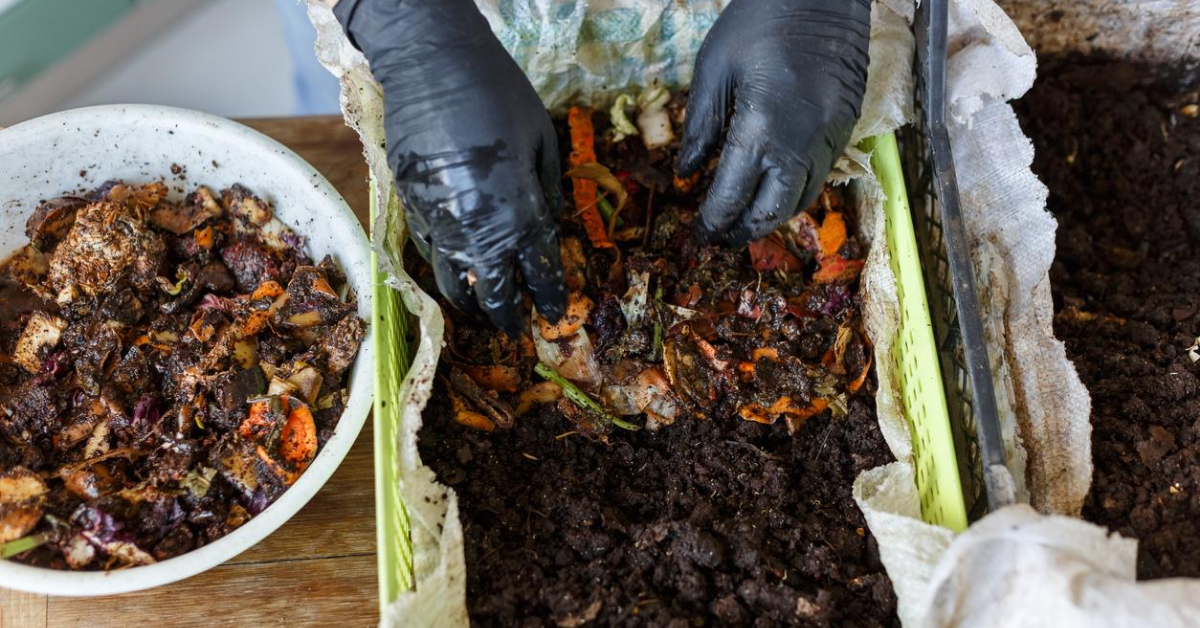 Your worms won't be particularly picky, but we tracked down some general guidelines to keep in mind. When feeding your farm family, a good rule of thumb is to say "yes" to things like non-citrus fruits, vegetables, egg shells, bread scraps, coffee grounds, used tea bags, and — wait for it — even vacuum cleaner dust! It's best to avoid things like citrus fruits, onions, garlic, meat, fish, poultry, eggs, dairy, and processed food. Happy worm farming, and let us know how you make out!  |
| Posted: 18 Sep 2020 03:03 AM PDT This story is from The Pulse, a weekly health and science podcast. Subscribe on Apple Podcasts, Stitcher or wherever you get your podcasts. For three nights in April, Heather Coutts listened through the door as her husband lay awake in bed, gasping for air. He told her later he'd strained to remember the details of his life insurance policy — had he signed all the documents? — in case he didn't make it. Coutts cared for him from a distance, while minding their 11-year-old and 1-year-old. After two weeks of belabored breathing, extreme fatigue and a trip to the emergency room, her husband started to feel better. But Coutts felt like she'd been hit by a truck. She had a sore throat and a fever. Hoping to avoid the hell her husband had just endured, Coutts called her close friend Alexis Lieberman, a Philadelphia pediatrician, to ask if there was anything else she should be doing. Lieberman and Coutts are like family — they met years ago volunteering at a camp for kids with queer parents and have stayed friends ever since. So when Lieberman suggested that Coutts try ivermectin, a cheap, safe drug designed to treat parasites that had almost no known side effects, Coutts trusted her. "We kind of thought, well, there's no negatives to taking this," said Coutts. "It's not going to have any really bad side effects. If it could help, why not?" Within 24 hours, her fever was gone. After two days, Coutts felt completely herself again. The Case for a Cheap, Available TreatmentIn the early days of the pandemic, Lieberman was convinced that the best way to temper the impact of the novel coronavirus would be to find an inexpensive, generic drug that would mitigate the virus's symptoms and keep people out of the hospital. None of the big medical associations, like the American Association of Pediatrics or the American Medical Association, were recommending therapies yet, so Lieberman looked in the various Facebook groups full of doctors she belonged to. "There were people just trying things," she recalled. "Especially ICU doctors and hospitalists. That's it, just trying things." Lieberman kept a running list of all the drugs her fellow physicians posted, researched each one, and eliminated those whose potential side effects were too risky. Among the remaining possibilities was ivermectin. Developed in the 1980s by Merck and approved by the Food and Drug Administration in tablet form to treat worms and as a topical cream to treat head lice, ivermectin is off-patent, widely available and inexpensive, and has few known side effects when taken at appropriate doses. It was originally developed to treat parasites in animals, and is still used for heartworm. It's been shown to be somewhat effective in treating other viruses, like dengue and yellow fever. Lieberman's interest was piqued in April, when she saw the results of a study published by a group of Australian researchers showing that ivermectin slowed the replication of the novel coronavirus in mammal cells. The scientists infected the cells with SARS-Cov-2 in a test tube, added ivermectin, and found that within 24 hours, the amount of viral RNA had been reduced by 93%. By 48 hours, essentially all viral material was eradicated. The results, while promising, fell short of a miracle cure: The concentration of ivermectin used on the cells was way too high to be safe or even feasible in the human body. Still, at lower doses, the researchers indicated that ivermectin had the potential to inhibit the replication of the virus in the body. The drug could also work differently in humans than in isolated cells because ivermectin modulates the way the body responds to inflammation and infection, according to Carlos Chaccour, an assistant professor of tropical medicine at Instituto de Salud Global de Barcelona. Chaccour has devoted more than a decade of his career to studying ivermectin. He said the in vitro study alone was not enough to start treating people en mass with ivermectin. Yet it showed enough promise to merit further research.  "This is a safe drug for a non-treatable disease, so test it, by all means," he said. "And if it doesn't work, then put it to bed. And if it works, then jackpot." 'You're suggesting eye of newt'Emboldened by the potential of the in vitro study and her success with Coutts, Lieberman started prescribing ivermectin to other patients, with anecdotal success. Still, she knew better than to extrapolate any conclusions from a few individual instances, and wondered whether there were any clinical studies she could draw data from. She started posting about ivermectin in one of her doctors' Facebook groups — one for physicians who are also moms. Expecting to be met with the same sense of experimentation she saw in earlier months, the response she got was jarring. "When I try to talk to doctors about ivermectin, it feels like someone has poisoned them against it before I even say my first word," Lieberman said. "The level of response is: You're suggesting eye of newt. Why don't we try some mugwort? Why don't we try some fairy dust?" Lieberman was surprised. It's common for doctors to treat patients using off-label drugs with a safe track record, especially in the context of a public health emergency for a disease with no known treatment. In the World Health Organization's COVID-19 guidance on the practice, known as compassionate use, it notes that "the decision to offer a patient an unproven or experimental treatment is between the doctor and the patient but must comply with national law." As she watched the trajectory of the antimalarial hydroxychloroquine rise and subsequently fall in the public eye, it dawned on Lieberman that some of the hostility she faced must be because the medical community was traumatized by its unbridled use. President Donald Trump hailed the drug as a potential "game changer" during the peak of the pandemic without any scientific evidence to back that up, sparking a frenzy of self-medication. An Arizona couple ingested the chloroquine tablets for a fish tank, which killed one of them; a run on the drug left lupus patients at a loss for the daily treatment they depend on. Lieberman said some people expressed fear the same thing would happen if another cheap, accessible drug were promoted before there was substantial evidence for its success. Three thousand miles away, deep in the Peruvian rainforest, that was already happening. Spiraling out of controlIn Latin America, ivermectin is a common treatment for parasitic worms; it's inexpensive and available over the counter. Its ubiquity there meant that the release of the in vitro study from Australia caused quite a stir among health officials, who were drawn to the potential promise of a drug in such wide circulation. Chaccour also attributed what he described as an over-reliance on the study to its somewhat misleading title, "The FDA-approved drug ivermectin inhibits the replication of SARS-CoV-2 in vitro". Ivermectin is FDA-approved, but not for COVID-19. In Peru, the need for such a treatment was mounting. Cases began to soar in April, with the number of official COVID-19 deaths there likely a dramatic undercount. By the beginning of May, COVID-19 was spreading among thousands of Indigenous residents of Peru's Loreto region in the Amazon jungle. Many of the communities there lack road access, and flights were grounded due to travel restrictions, making supplies in already remote areas hard to obtain. Hospitals quickly ran out of bed space and oxygen. Official case counts were unreliable due to lack of testing, but local infectious disease experts estimated that 60% of people in Loreto's most populous city, Iquitos, could have been infected. The positivity rate there is over 30%. Meanwhile, it appeared new research to support ivermectin was emerging. Shortly after the Australian study came out, a Chicago-based company called Surgisphere released several papers based on data pulled from a massive pool of COVID-19 patients at 1,200 hospitals around the world. The data became known for demonstrating evidence against hydroxychloroquine, but researchers also drew from the data to explore the impact of ivermectin. Their "pre-prints" — non-peer-reviewed studies — showed the drug had significant promise: Patients who received ivermectin had a 65% reduction in the need for mechanical ventilation and an 83% reduction in overall death rate. The combination of the Surgisphere study and the in vitro Australian research was enough for Peru's health ministries to recommend ivermectin in their national COVID-19 treatment protocol. Bolivia did the same. Just a few weeks after the preprints were released, it was revealed that the entire Surgisphere data set had likely been fabricated. The Lancet and the New England Journal of Medicine both retracted the studies they had published based on the data. The ivermectin pre-prints were also retracted. Brief currency though it had, the evidence backing ivermectin was quickly adopted by elected officials. "There is a ghost of this pre-print driving policy decisions all through Latin America," Chaccour said. In Loreto, the province's leader had joined forces with a group of evangelical volunteers to offer free ivermectin injections to thousands of residents. Local reports noted there was a run on pharmacies, draining their supply of ivermectin. Some began using the veterinary formulation of the drug, instead of the one designed for humans. At the beginning of June, the country's health minister proclaimed there was "no time to wait for scientific evidence," and President Martín Vizcarra announced the country had acquired 500,000 doses of ivermectin for distribution. Ultimately the Peruvian government issued a warning against using the veterinary formula, but Chaccour said it is now encouraging hospitals and pharmacies to formulate their own ivermectin, a process that is normally highly regulated. It's difficult to know if the treatment did, in fact, work, because of a lack of follow-up care or data tracking. Doctors reported that some who received the mass injections developed racing heartbeats and anxiety; others got infections at the injection site. Overall, the rate of new cases in the region did begin to slow by early June. But with such widespread consumption, it's difficult to isolate ivermectin as having a causal effect. Cases have risen again in Peru; it has the fifth highest COVID-19 case count of any country in the world, with its steepest increase in case counts during the month of August. Beyond the potential for side effects and lack of oversight, Chaccour worries about a false sense of security that widespread use of an unproven drug could offer. "How about moral risk — people feeling `protected' because they got their shot?" he said. He also noted that because parasites modulate the body's immune response, massive deworming of a population where the prevalence of parasites is naturally high could affect the way an entire population responds to COVID-19 or other viruses. On June 22, the Pan-American Health Organization, a regional subset of the World Health Organization, issued a statement saying that ivermectin should not be used to treat COVID-19, and that it would not be included in its international Solidarity Trials, which included the antiviral drug remdesivir and hydroxychloroquine. The FDA also issued a warning not to self-medicate with ivermectin. What it takes to get a trial off the groundBack in Philadelphia, Alexis Lieberman was at her wits' end. She recognized that unsanctioned, mass injections of Indigenous groups is "less than ideal," but the way she saw it, a comprehensive study would put the issue to bed once and for all. She just could not understand why the FDA or a large research institution wouldn't fund an ivermectin trial when it showed such promise. "The truth is any country could complete a study on whether or not ivermectin helps COVID disease in the space of three weeks, and nobody's done that," Lieberman said. "It's worth one big, fast, well-designed, well-funded study that I think the government should pay for." In the absence of a large study, Lieberman set out to conduct her own. She teamed up with a statistician, someone who runs clinical trials for a living and a handful of doctors around the globe who'd had their own anecdotal success with ivermectin. One of them, a pulmonary critical care specialist in Broward County, Florida, named Jean Jacques Rajter, had been treating patients in his ICU with ivermectin since he saw the Australian in vitro study. Rajter published the results of an analysis of his patients' charts, which found a 10% reduction in mortality rate among severely ill COVID-19 patients who had been given ivermectin. His paper is in the process of being peer-reviewed for official publication. Both Rajter's study and the Iraqi study were observational, in part because getting a gold-standard, randomized controlled trial approved by federal agencies and having the money to back it is no easy task. Rajter, Liebermann and their team proposed a study that would span several dozen emergency departments across the country. They scraped together the cash for an independent institutional review board to approve their research protocol, but were denied on the grounds that they had too many participating locations for there to be a reliable control. With the support of a large research institution or teaching hospital, they say, that problem could be solved. They estimate they could conduct a 300-person study like the one they proposed for a couple hundred thousand dollars. "That would not be an expensive proposition for a regulatory agency, considering the amounts of resources that are being spent across the board," Rajter said. But, he said, because no one in his group has a prestigious university or pharmaceutical company to back them, it's been a struggle to garner attention. "Ivermectin is a generic drug, so no one is going to make a lot of money," Rajter said. "There's no windfall for any pharmaceutical company here." Trials for remdesivir, which is owned by pharmaceutical giant Gilead; hydroxychloroquine, which was touted by Trump; and the steroid dexamethasone, studied at Oxford University, all yielded results within months, helping to formulate the standards of care for COVID-19. Merck, which originally developed ivermectin but whose patent on it expired, does not endorse its use for COVID-19 treatment. In a statement, a Merck representative said that "following detailed review of the evidence available for ivermectin we calculated that the dose required to attain an antiviral effect would significantly exceed the doses known to be safe and well tolerated," referencing the in vitro study. "We therefore concluded that further research to evaluate the clinical potential of ivermectin for the treatment of SARS-CoV-2 was not warranted." Merck is in the process of developing its own new therapy for COVID-19, which it would presumably patent. It is also involved in vaccine trials. A representative from Merck was not available for an interview with WHYY. Knowing how to play the gameGetting a clinical trial going can be a smoother process if the doctor has a relationship with pharmaceutical companies and the FDA, as Sabine Hazan does. A Malibu-based gastroenterologist who runs a company that facilitates clinical trials for pharmaceuticals, Hazan's research mostly focuses on the microbiome — essentially, the genetic makeup of the human gut. Before the pandemic, she was thrilled to dig deeper into her latest project: research on the impact of fecal transplants on autism. But when the pandemic hit, all Hazan's research stopped in its tracks. Patients were too scared to come to her clinic to participate in trials. Nobody seemed to care about the gut anymore. She figured the fastest route back to her research was to apply her expertise toward finding a cheap, effective treatment for COVID-19. 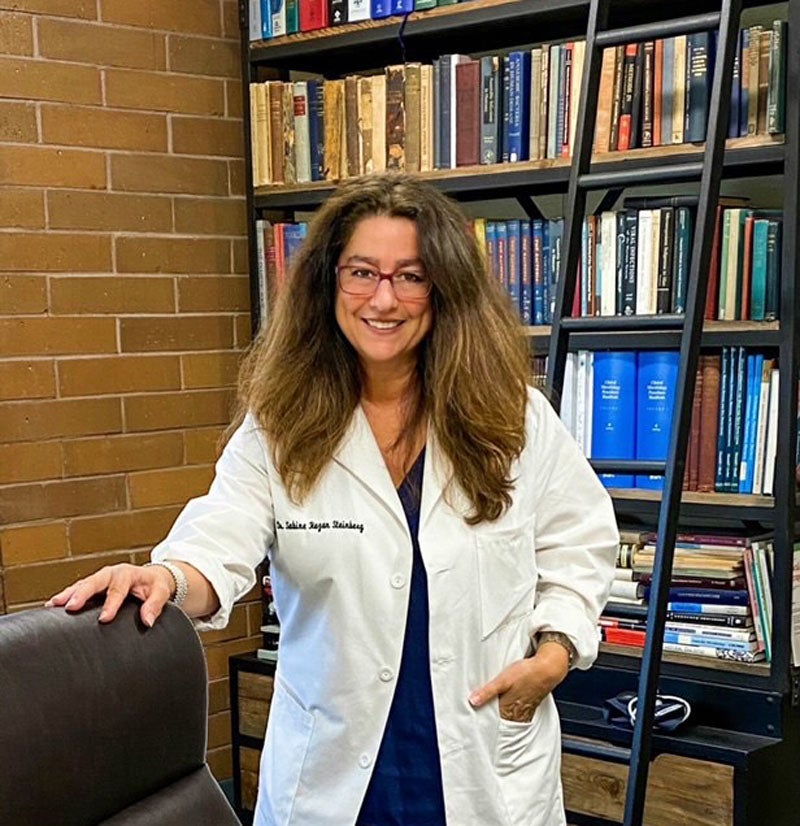 "I honestly think there's something wrong with me because I play with poop, I play with a dangerous virus, and I'm in bed with Big Pharma," Hazan said. "And let's not forget the FDA!" Hazan decided to leverage her experience conducting clinical trials to run one for ivermectin, which she knew about because her sister had studied it as a treatment for head lice. She teamed up with Australian scientist Thomas Borody, whose treatment for Crohn's disease appears to have cured the illness in many patients. Because ivermectin is generic, Hazan knew there was no money to be made on this, but she wasn't concerned about that for herself. Recently, she turned 50 and told her husband that for her midlife crisis, instead of buying a Lamborghini or a condo in Italy, she'd be investing in the latest $250,000 stool analysis technology. Besides, she figured the sooner the medical community could find a treatment for COVID-19, the sooner she could get back to her normal life, and her own research. Hazan is paying for the clinical trial, which aims to recruit 300 patients, out of her own savings. Costs range from the medical equipment each patient will receive to monitor their improvement, such as Holter heart monitors and pulse oximeters, to the cost of hiring aides to draw blood regularly at patients' homes. She said she is hopeful for investment from the pharmaceutical industry, but so far no companies have stepped up. She has worked with Merck in the past on drug trials, and approached the company about investing in ivermectin, but it wasn't interested. "Nobody wants to invest in trials in medications that are cheap because they're not making any money," Hazan said. "But these are billion-dollar companies. It's time for them to give back. It's more important to be a hero than it is to be rich." She is about to start recruiting participants for the double-blind, randomized control trial, which Hazan anticipates will be a challenge. "Trying to convince people to go on a trial where they may be on a sugar pill is a nightmare," she said. "But it needs to be done." There are now 32 studies for ivermectin listed on clinicaltrials.gov, including Hazan's, and Chaccour is running his own as well. Aside from the Iraqi study, all these studies are still in the recruiting stages. Alexis Lieberman is still offering ivermectin to her patients in Philadelphia. In the absence of more evidence to back her observations, she includes the caveat that it's not FDA-approved for COVID-19 but there are a couple of studies that show promise. She estimated she's given it to a dozen patients, with strong results each time. Lieberman does her best to resist being drawn toward conspiracy theories that there is a concerted effort to stamp the drug out. Instead, she's largely resigned herself to the reality that the financial forces driving the pharmaceutical research industry are enough to keep ivermectin low on their priority list. "You don't need a cabal of people in a back room saying, 'Let's make sure this one doesn't go because we're gonna make more money off the other one,'" she said. "I just think you have a million small actors, who act in their small fields, and are completely ruled by what will make money." But for her, it's high on the priority list. People are still dying, and she's not willing to wait.  |
| You are subscribed to email updates from "How do you know if you have worms in your poop" - Google News. To stop receiving these emails, you may unsubscribe now. | Email delivery powered by Google |
| Google, 1600 Amphitheatre Parkway, Mountain View, CA 94043, United States | |


Comments
Post a Comment