What are zoonotic diseases, how they spread, and how to prevent them - Insider - INSIDER
What are zoonotic diseases, how they spread, and how to prevent them - Insider - INSIDER |
- What are zoonotic diseases, how they spread, and how to prevent them - Insider - INSIDER
- ‘Sushi Parasites’ Up 283-Fold in Last Four Decades - Courthouse News Service
- What are parasites and how do they make us sick? - The Conversation AU
| What are zoonotic diseases, how they spread, and how to prevent them - Insider - INSIDER Posted: 09 Apr 2020 07:46 AM PDT
A zoonotic disease is any disease that can be passed between animals and people. Some examples of zoonotic diseases are ebola, swine flu, and the COVID-19 coronavirus. Zoonotic diseases are common, ranging from mild symptoms to potentially deadly illnesses. Experts estimate that over 60 percent of infectious diseases can be spread from animals to humans. Here's what you need to know about zoonotic diseases and how to protect yourself from getting them. How zoonotic diseases go from animals to peopleMany different types of germs can cause a zoonotic disease including bacteria, viruses, parasites, and fungi. "There are several ways that zoonotic pathogens move from animals to people," says Richard Ostfeld, PhD, a disease ecologist at the Cary Institute of Ecosystem Studies. These pathways include:
Examples of common zoonotic diseasesRabies: One well-known zoonotic disease is rabies, a deadly condition that is transferred through an animal bite. Rabies has traditionally been associated with dogs. In fact, dogs are the source of 99 percent of rabies cases, mainly in Africa and Asia. In the US, rabies is rare. Moreover, dogs are vaccinated against rabies, so the most common sources are wild animals like bats and raccoons. Once a person starts showing symptoms like agitation and confusion, the disease is almost always fatal. Lyme Disease: Lyme disease is the most common zoonotic disease in the US. Symptoms include rash, fatigue, headache, and fever. The disease is transmitted through the bite of a blacklegged tick. Mice are typically the carriers of Lyme disease, and when a tick bites an infected mouse, it then carries the disease to any human it bites. If Lyme disease is not treated, it can spread through the whole body, affecting the heart and nervous system. Even if you do get treatment, you may still have long-term symptoms of pain and fatigue. Salmonella: Salmonella is a bacterial infection that affects 1.35 million people in the US every year. Salmonella is generally spread through infected chicken or eggs, but it can come from a variety of foods including other meats and vegetables. The symptoms of Salmonella, including fever, diarrhea, and cramps, are unpleasant, but most people recover without antibiotics in 4 to 7 days. Malaria: Malaria is a parasitic illness caused by a bite from an infected mosquito. In 2018, there were 228 million cases of malaria worldwide, mostly in sub-Saharan Africa and South Asia. Malaria causes flu-like symptoms including chills, aches, and nausea. If left untreated, it can be fatal. How to prevent and treat zoonotic diseases"There are relatively few vaccines for zoonotic diseases," Ostfeld says, but this is becoming a bigger focus for scientists after outbreaks of zoonotic viruses like Ebola and COVID-19. One challenge to developing a vaccine may be that some zoonotic diseases mutate into many different forms, making it difficult to create a universal vaccine. Zoonotic diseases are treated depending on the type of germ they come from. Bacteria are treated with antibiotics, while parasites can be treated with anti-parasitic drugs, Ostfeld says. "Handling, killing, and eating wildlife is definitely risky," Ostfeld says. Being in rodent-infested buildings can also increase your risk, as rodents are the source of many zoonotic infections, Ostfeld says. One important step to protect yourself against zoonotic disease is to use insect repellents or protective clothing to keep away ticks and mosquitoes. It's also important to always wash your hands after touching or being around animals. If you can't wash your hands right away, you can use a hand sanitizer with at least 60 percent alcohol to kill germs. Zoonotic diseases are a common cause of illness and it's important to take precautions whenever you may come into contact with animals. If you start to feel ill after having contact with an animal or animal droppings, go see a doctor as soon as possible.  |
| ‘Sushi Parasites’ Up 283-Fold in Last Four Decades - Courthouse News Service Posted: 19 Mar 2020 09:58 AM PDT (CN) — A worm may be hitching a ride on your next plate of sushi – and it's not some trendy new food craze. Researchers at the University of Washington delivered the icky news Thursday that "sushi parasites" have been on the rise for the last 37 years and no one noticed.
Take a deep breath. Nobody wants to eat a worm in their next plate of fresh sashimi but according to the study published in the journal Global Change Biology the anisakis or "herring worm" cannot reproduce in the human intestine. At most, the study authors say, humans chalk up any infestation to a case of food poisoning. Disease spread from animals, or zoonosis, is on everyone's mind thanks to the leading theory behind the spread of the novel coronavirus COVID-19, which is believed to have originated from a "wet market" or live animal market in Wuhan, China. But zoonotic disease accounts for 58% of infectious diseases across the globe, including rabies and malaria, according to the study authors who tracked the rise of the marine worm anisakis. From 1978 to 2015, the anisakis worm saw a 283-fold increase in abundance throughout marine wildlife. Found in undercooked or raw fish and measuring about the size of a U.S. nickel, the anisakis causes a disease that is magnitudes different than COVID-19. Assistant professor Chelsea Wood at the UW School of Aquatic and Fishery Sciences and a corresponding author of the study says neither the anisakis nor the disease it causes – anisakiasis or anisakidosis – can be transmitted from human to human. The symptoms of the disease are similar to those of other types of food poisoning: Burning or painful tingling in arms or legs, headache, nausea, vomiting, diarrhea, hallucinations, and temperature reversal: cold objects feel hot and hot objects feel cold. In the developing world most people don't not think of wildlife when they think of disease, Wood told Courthouse News. "Disease links us to nature," said Wood. The question on why there has been such an uptick in infectious diseases across the globe has been a persistent question for researchers in her field. The transmission to humans from the food chain starts when shrimp or small crustaceans eat a freshly hatched anisakis worm. The truism follows that there is always a bigger fish to eat the smaller fish. Eventually the parasite makes its way to a seafood market or before a sushi chef. Wood said processors and sushi chefs are adept at removing any parasites. The study looked at fish freshly caught from the ocean. The study illustrates the health risk to both human and marine mammals over the last four decades, said Wood. Humans will be inconvenienced by their bout of "food poisoning," but the effects to marine mammals remains unknown. Researchers compared the rise of the anisakis parasite to another parasitic nematode, the pseudoterranova or "cod worm." While the anisakis saw a dramatic jump in its population over a 37-year time period, the pseudoterranova saw no change. "On average, we estimated that Anisakis spp. abundance increased from less than 1 anisakid per one hundred hosts in 1978 to more than 1 anisakid in every host examined in 2015," the study authors wrote. "This pattern was not driven by any single host species." The black scabbardfish was most represented among infected marine life but did not drive the pattern observed across all hosts and no one specific region saw a larger pattern. There is no clear explanation for the increase, but rising temperatures in ocean waters, agricultural runoff and additional safeguards under the Marine Mammal Protection of 1972 are the leading theories. Seals, sea lions, whales and dolphin populations benefitted from the protection, which likely meant more hosts roaming the ocean according to Wood. An increase in parasitic worms could signal the ecosystem is doing well, but more vulnerable marine mammal populations are at risk. When discussing conservation efforts for marine life, Wood said few consider the spread of parasitic worms which may provide a powerful explanation for the failure of some populations to recover. Research was also conducted by Bates College in Maine, Washington Sea Grant and UW graduate student Evan Fiorenza.  |
| What are parasites and how do they make us sick? - The Conversation AU Posted: 17 Nov 2019 12:00 AM PST A parasite is an organism that lives in or on an organism of another species. Three main classes of parasites can cause disease in humans: protozoa, helminths, and ectoparasites. Protozoa and helminths largely affect the gut, while ectoparasites include lice and mites that can attach to or burrow into the skin, staying there for long periods of time. The majority of protozoa and helminths tend to be non-pathogenic (meaning they don't cause disease) or result in very mild illness. Some, however, can cause severe disease in humans. Read more: Health check: the low-down on 'worms' and how to get rid of them Faecal-oral transmission, where parasites found in the stool of one person end up being swallowed by another person, is the most common mode of transmission of parasitic protozoa and helminths. The initial symptoms tend to be gastrointestinal symptoms like diarrhoea. When parasites invade the red blood cells or organs, the consequences can become more serious. ProtozoaProtozoa are tiny single-celled organisms that multiply inside the human body. The protozoa giardia, for example, has a classic two-stage life cycle. In the first stage, called trophozoite, the parasite swims around and consumes nutrients from the small bowel. In the second stage it develops into a non-moving cyst. Cysts excreted in faeces can contaminate the water supply, and ingesting contaminated food or water results in transmission. Close human to human contact and unsanitary living conditions can promote transmission. Symptoms of giardia can include severe or chronic diarrhoea, abdominal cramps, fatigue, weakness and weight loss.  Other important protozoa are the plasmodium species. Plasmodium develop in mosquitoes, and infected mosquitoes transmit the parasite to humans by biting them. Plasmodium destroys red blood cells which impacts organ function and causes a disease in humans known as malaria. Malaria causes the most deaths of all parasitic diseases. In 2017 it was estimated malaria resulted in 435,000 deaths globally, most of them young children in sub-Saharan Africa. Read more: How our red blood cells keep evolving to fight malaria HelminthsHelminths, often called worms, are large multicellular organisms usually visible to the naked eye in their adult stages. As a general rule, helminths cannot multiply inside the human body. One major group of helminths are flatworms. Flatworms literally have flattened soft bodies. Their digestive cavity has only one opening for both the ingestion and removal of food. It's thought 80% of flatworms are parasitic. Tapeworms are one type of flatworm. The most common human tapeworm in Australia is the dwarf tapeworm. The prevalence of dwarf tapeworm in isolated communities in northwest Australia is estimated to be around 55%. Infestation in humans comes from ingesting dwarf tapeworm eggs. Transmission from person to person occurs via the faecal-oral route. As with other parasites, the major risk factors are poor sanitation and shared living quarters. Symptoms include diarrhoea, abdominal pain, weight loss and weakness. 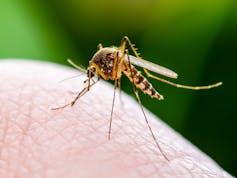 Another major group of helminths are nematodes, commonly known as roundworms. Nematodes are the most numerous multicellular animals on earth and can be found in almost every environment. Unlike flatworms, they do have a digestive system that extends from the mouth to the anus. More than 50% of the world's population are thought to be affected at one point during their life by at least one of six main classes of nematodes. The eggs or larvae of these nematodes usually develop in soil before being transmitted to the human host. For this reason these nematodes are often called soil-transmitted helminths. A good example are hookworms which infest humans by penetrating the skin from contaminated soil. So wearing appropriate footwear is an important way to prevent hookworm transmission. Read more: A parasite attack on Darwin's finches means they're losing their lovesong The pinworm Enterobius vermicularis has a different life cycle to the other nematodes. Pinworm larvae develop in eggs on the skin near the anus or under the fingernails. Pinworm, also known as threadworm, is the most common helminth parasite in Australia. Itching around the anus is a major symptom of pinworm. Pinworms are easily passed from one person to another and it's common for entire families to be infested. EctoparasitesThe term ectoparasites generally refers to organisms such as ticks, fleas, lice and mites that can attach or burrow into the skin and remain there for long periods of time. Scabies, for example, a contagious skin disease marked by itching and small raised red spots, is caused by the human itch mite. Scabies usually is spread by direct, prolonged, skin-to-skin contact. Head lice are small, wingless insects that live and breed in human hair and feed by sucking blood from the scalp.  Prevention and treatmentSome parasites can lie dormant for extended periods of time. This can make the diagnosis of parasitic infestation challenging as there may be no symptoms, or symptoms can be vague and non-specific. The good news is we have very good medications to treat many different kinds of parasites once they've been diagnosed. These medications do have side effects but on the whole are very effective. Read more: Six human parasites you definitely don't want to host Treatment of parasites should be accompanied by preventative strategies such as improving sanitation and ensuring the availability of appropriate clothing and footwear in affected areas. The World Health Organisation has recommended periodic medical treatment (deworming) to all at-risk people living in endemic areas, but widespread implementation remains challenging.  |

| You are subscribed to email updates from "parasitic diseases in humans" - Google News. To stop receiving these emails, you may unsubscribe now. | Email delivery powered by Google |
| Google, 1600 Amphitheatre Parkway, Mountain View, CA 94043, United States | |


Comments
Post a Comment